
Blue Marlin Fishing in Panama
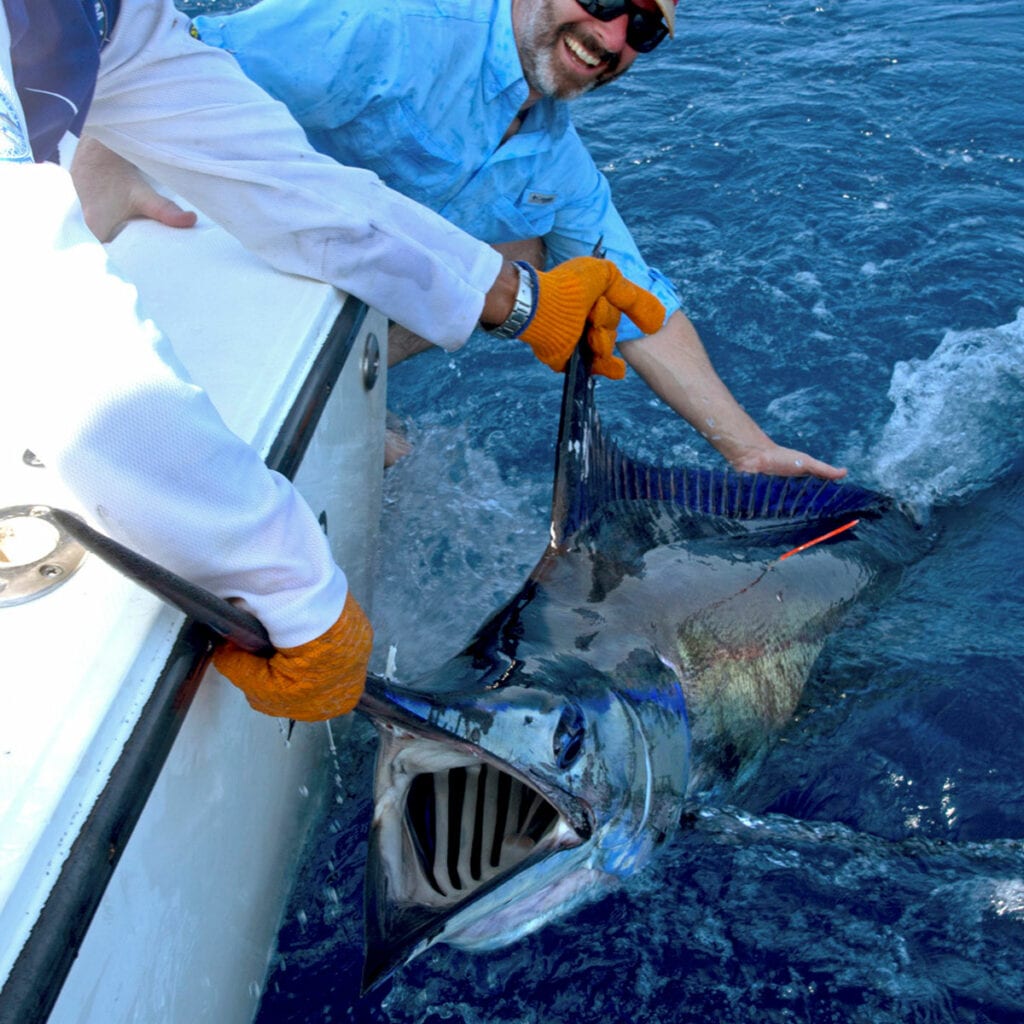
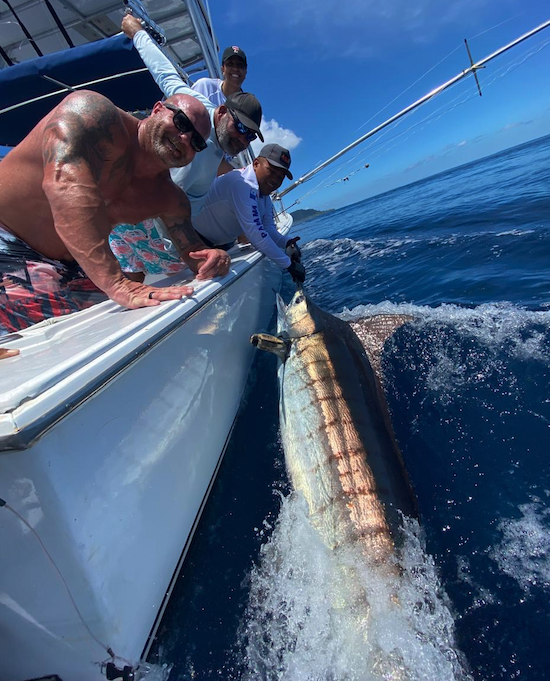
Blue Marlin are one of the Gulf of Chiriquí’s most powerful offshore game fish. At Panama Nautical Club, we target them primarily in deep water around Isla Montuosa, Hannibal Bank and the offshore corridor beyond the islands.
Our captains use a combination of large-plug trolling and live baiting, adapting throughout the day to find bait, current and productive water.
Blue Marlin at a Glance
- Scientific Name: Makaira nigricans
- Fishing Grounds: Isla Montuosa, Hannibal Bank and deep offshore waters
- Primary Technique: Trolling large plugs and live bait along offshore edges, bait concentrations and current lines
- Best Boat: 32′ BlackFin with fighting chairs
When Is the Best Time for Blue Marlin in Panama?
December through April — Panama’s Dry Season: This is the main peak window for Blue Marlin fishing in the Gulf of Chiriquí. Stable weather, clear blue water and rich ocean currents bring high numbers of Blue and Black Marlin together offshore.
How We Fish for Blue Marlin
We commonly target Blue Marlin by trolling large plugs along the edges of open water. This approach allows us to cover significant amounts of water while looking for areas holding bait and predatory activity.
Floating structures can make an already productive area even more interesting. A piece of floating debris offshore can attract bait and become a gathering point for larger predators. When we find one surrounded by life, our captains may switch tactics and bump troll live bonito around the structure.
The Gulf of Chiriquí is an unforgiving place to be a live bait. Large predatory fish are everywhere, and a bonito swimming over a productive structure can attract a surprising variety of species. When the clicker goes off, there is no guarantee of what is on the other end. It could be a Blue Marlin, Black Marlin, sailfish, dorado or big yellowfin tuna.
That unpredictability is part of what makes fishing these waters so compelling.
Where we Fish for Blue Marlin
Our Blue Marlin fishing grounds include Isla Montuosa, Hannibal Bank, deep offshore waters beyond the islands, offshore floating structure and productive nearshore bottom structure.
Because Panama Nautical Club is based on Isla Boca Brava, already positioned in the Gulf of Chiriquí, the runs to offshore fishing grounds are shorter, giving our anglers more time on the water.
Captain’s Tip:
“Blue marlin in the Gulf of Chiriquí are often a game of covering water. We head offshore, troll large plugs and look for the combination of bait and current. If we find something floating with life around it, that’s even better. We’ll bump troll live bonito around it and you never really know what’s going to eat the bait. It could be a blue marlin, a black marlin, a sailfish, a dorado—or sometimes a big yellowfin.” — Captain Fred, Panama Nautical Club
Blue Marlin Faq's
Yes. Blue Marlin are a catch-and release species in Panama. Our crews are experienced in handling large billfish with the goal of releasing them safely and allowing the fish to continue swimming after the encounter.
Yes. Previous big-game fishing experience is not required. Our captains and crew handle the technical aspects of finding bait, preparing tackle and positioning the boat, while anglers are guided through the fight. Blue Marlin fishing is physically demanding, particularly when targeting larger fish, but the crew adapts the experience to the angler.
Our offshore fleet includes 32-foot BlackFin sportfishing boats equipped with fighting chairs and enclosed cabins. The fighting chairs provide a stable position during extended fights with large fish, while the enclosed cabins offer shade and protection during long offshore runs.