Fishing Species in Panama

The Pacific Coast of Panama offers some of the most diverse sportfishing in Central America, with year-round opportunities for both inshore and offshore species. In the Gulf of Chiriquí, anglers can target black marlin, blue marlin, sailfish, roosterfish, cubera snapper, yellowfin tuna, dorado, wahoo and more depending on location and season.

Offshore Fishing Species

Black Marlin

  • Scientific name: Istiompax indica
  • Type: Billfish
  • Habitat: Offshore Pacific waters and banks
  • Techniques: Trolling and live bait
  • Season: Year-round; peak December-February and July-August. Note that months are just an indicator, the key is bait and when they concentrate.

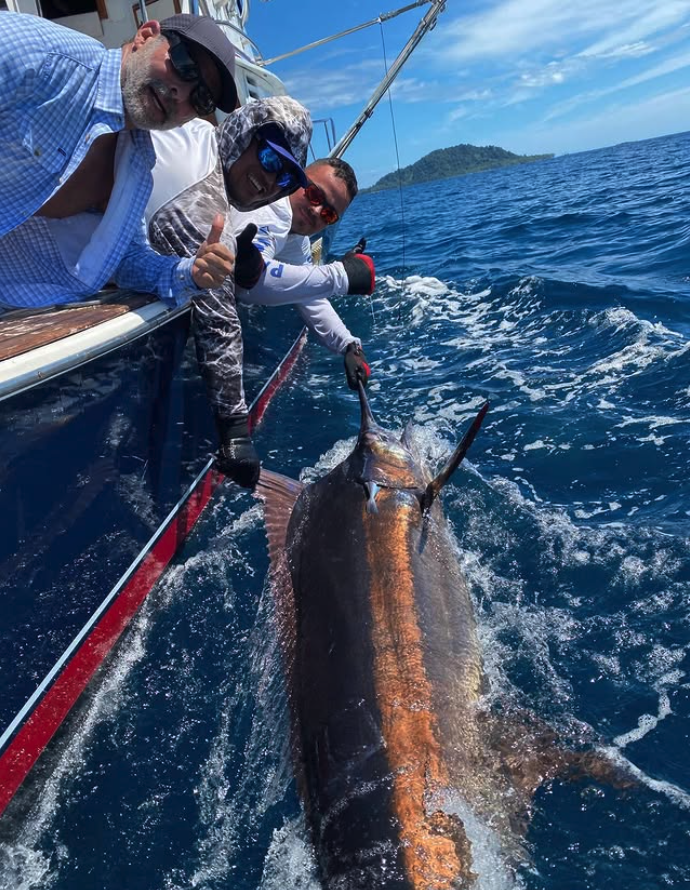
Black marlin are powerful offshore predators known for hunting around shallow banks and near-coastal waters. Prized for their aggressive strikes and powerful runs, they can reach exceptional sizes, with some of the females we catch weighing over 1,000lbs! Black marlin are a protected species in Panama and are strictly catch-and-release.

Captain’s tip: Captain Fred says, “Live baiting for black marlin is the way to go —plus, it’s more exciting and technical than trolling lures, and that’s why I love it. First we catch live bonito, and keep them lively in the tuna tubes, then we head out to Montuosa or the Bank. When a black marlin shows up, it’s pure chaos—the strike is violent, the reel screams, and the surface explodes. That rush is what we live for.”

black marlin fishing
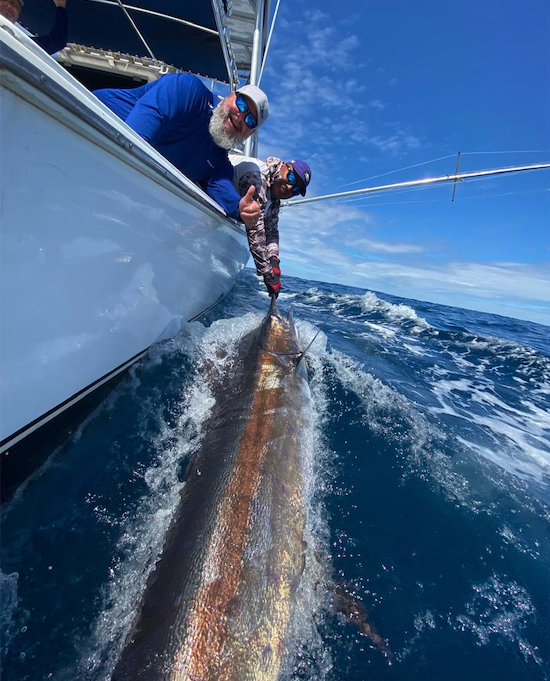
blue marlin in panama montuosa

Blue Marlin

  • Scientific name: Makaira nigricans
  • Type: Billfish
  • Habitat: Offshore blue water and oceanic structure
  • Techniques: Trolling and live bait
  • Season: Year-round; peak December-April

Hooking and releasing a large blue marlin is one of sport fishing’s greatest challenges and thrills. Blues are caught worldwide on live and dead bait and large trolling lures, with their explosive strikes and spectacular aerial displays making them among the ocean’s most unforgettable game fish.

The all-tackle records are 1,402 lb 2 oz for the Atlantic, caught off Vitoria, Brazil, and 1,376 lb for the Pacific, caught off Kona, Hawaii. Blue marlin are a protected species in Panama and are strictly catch-and-release.

Captain’s Tip: For blue marlin in the Gulf of Chiriquí, we head for deep offshore water and troll large lures, working areas around Isla Montuosa, Hannibal Bank, and the deep-water corridor beyond the islands. The key is covering water and finding bait and current—when those come together, the blues are often close by.

Yellowfin Tuna

  • Scientific name: Thunnus albacares
  • Type: Offshore pelagic game fish
  • Habitat: Open Pacific, offshore banks and areas of bait concentration
  • Techniques: Trolling, live bait, casting and jigging
  • Season: Year-round; peak April-July

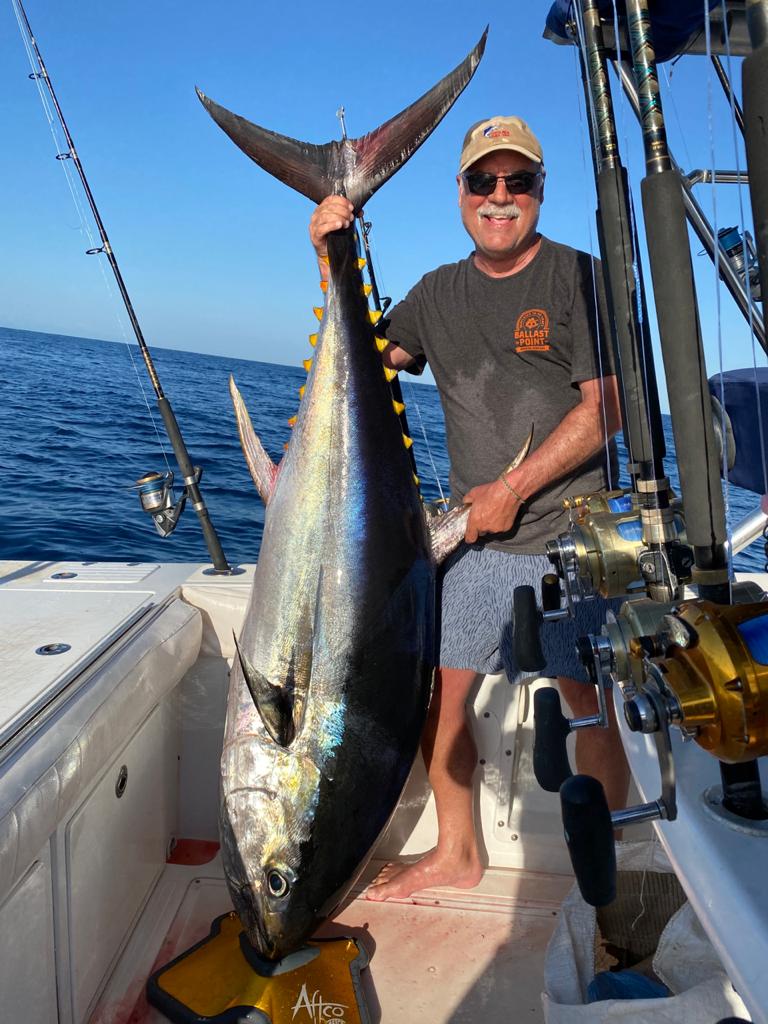
Yellowfin tuna are among the Gulf of Chiriquí’s premier offshore game fish and is often regarded as the hardest-fighting fish in the ocean, pound for pound. They are commonly found around Hannibal Bank, Isla Montuosa, Coiba, and offshore banks where baitfish gather. The most spectacular action comes during tuna frenzies, when schools drive baitfish to the surface in explosive patches of boiling water, often with diving seabirds and porpoises nearby. Yellowfin tuna in Panama can exceed 100 pounds, with powerful fish in the 50–100+ pound class encountered in the offshore waters of the Gulf of Chiriquí.

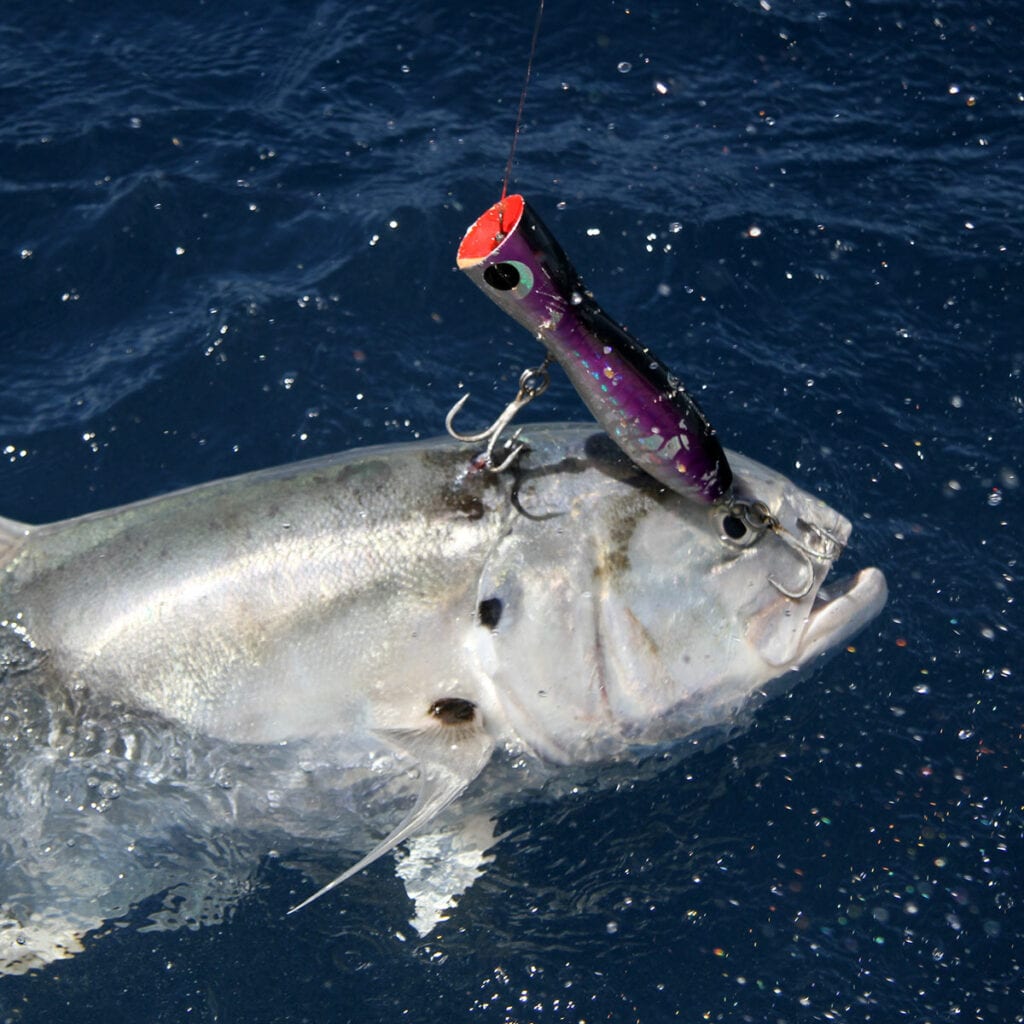
Captain’s tip: Captain Jiuver says “We use our fish finders to locate bait and tuna, and talk with the commercial boats to locate the action. Once we’re on the fish, we cast poppers, stickbaits, or live bait into the frenzy and stay with the school while it’s feeding

Panama Tuna
sailfish panama

Pacific Sailfish

  • Scientific name: Istiophorus platypterus
  • Type: Billfish
  • Habitat: Offshore warm Pacific and Indian oceans
  • Techniques: trolling with strip baits, plures, feathers or spoons, as well as live bait fishing and kite fishing
  • Season:  Year-round; peak April-May as dry season winds tend to calm down

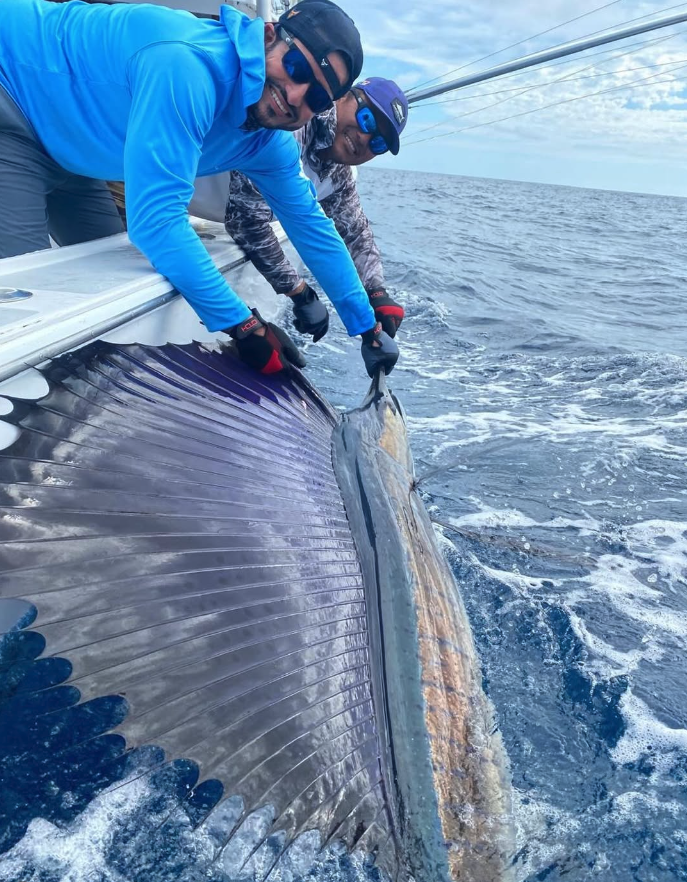
Pacific Sailfish tend to be considerably larger in size than its Atlantic counterpart, with 100-plus-pound fish being run of the mill. The world record has held since 1947: a 221-pounder taken off Ecuador. 

Its fighting ability and spectacular aerial acrobatics endear the sailfish to the saltwater angler, but it tires quickly and is considered a light tackle species. 

Captain’s Tip: The most action comes when Pacific sailfish are found on or near the surface, where they actively feed. Keep an eye on the surface activity and birds, as these can help locate feeding sailfish and put you in the best position for a strike.

Pacific Sailfish are a protected species in Panama and are strictly catch-and-release.

Dorado or Mahi-Mahi

  • Scientific name: Coryphaena hippurus
  • Type: Offshore pelagic game fish
  • Habitat: Open water, floating debris, weed lines, current boundaries and areas with baitfish concentrate
  • Techniques: Trolling, casting and live bait
  • Season: July-September when heavy rain from the green season form offshore debris lines where hungry dorado go to feed

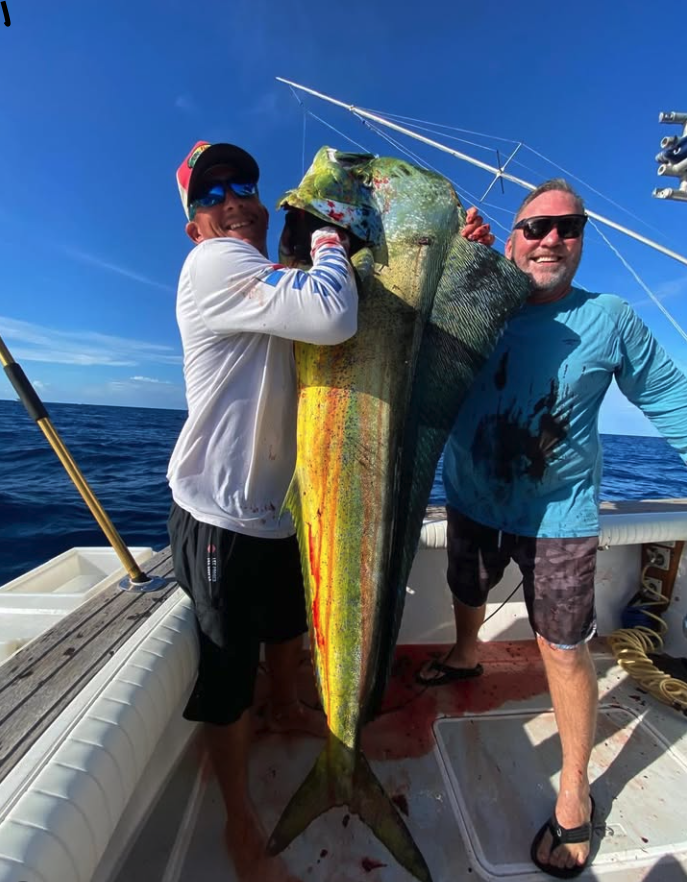
Dorado are aggressive, acrobatic game fish known for their vivid emerald, blue, and yellow colors. They are excellent sight-casting targets and can grow exceptionally fast, reaching up to 18 inches in a single year. When a feeding school gathers around the boat, their explosive strikes and spectacular jumps make dorado one of the Gulf of Chiriquí’s most exciting fish to target.

Captain’s tip: Dorado are often found around floating logs and debris, which attract baitfish and create ideal feeding opportunities. Casting poppers, stickbaits, or live bait around debris can produce explosive strikes from feeding dorado.

cow dorado
Wahoo

Wahoo

  • Scientific name: Acanthocybium solandri
  • Type: Offshore pelagic game fish
  • Habitat: Offshore structure, current lines and open water
  • Techniques: High-speed trolling, bait fishing and specialized lures
  • Season: June-October when the waters are cooler around 79-80F

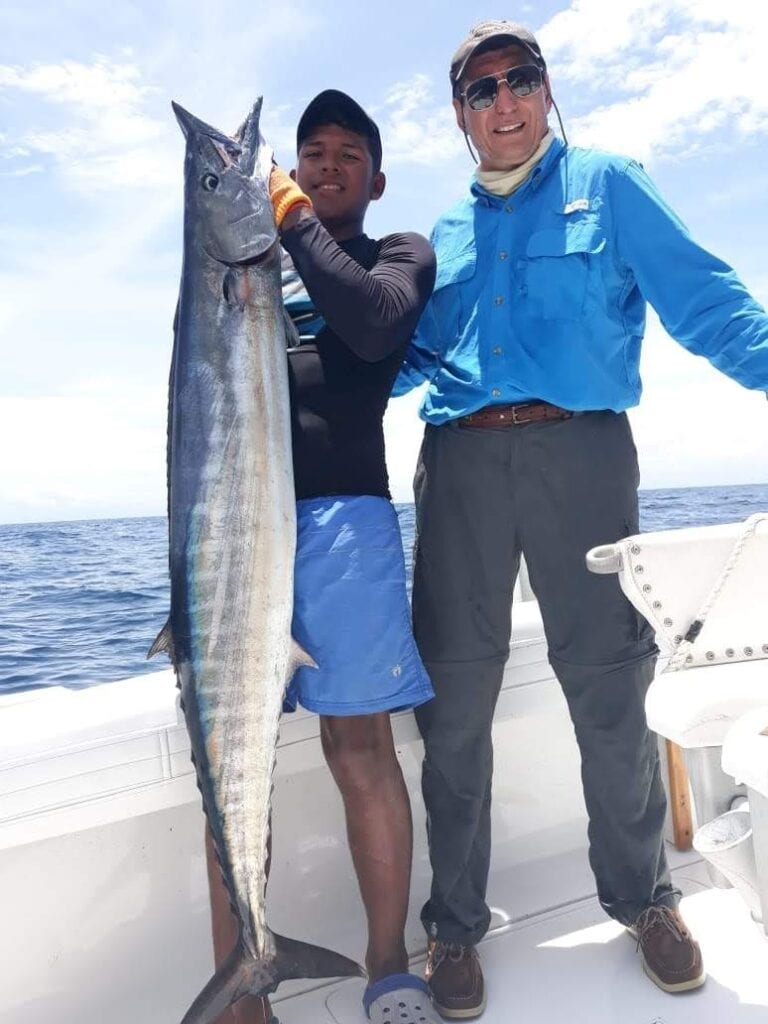
Many anglers consider them the fastest fish in the sea and are nicknamed “torpedoes with fins”. Found throughout tropical and warm seas, wahoo may travel in packs and typically patrol near the surface, from offshore blue water to steep rocky shorelines and submarine shelves. One of the largest members of the mackerel family, wahoo are prized for their white, delicious flesh and are a favorite at our restaurant. The all-tackle world record is 184 pounds, caught off Cabo San Lucas in 2000.

Captain’s tip: We often run lures at higher speeds above 15 knots to trigger their aggressive strikes, especially around steep drop-offs like Hannibal Bank.

Inshore & Reef Species

Cubera Snapper

  • Scientific name: Lutjanus cyanopterus
  • Type: Reef and structure fish
  • Habitat: Rocky reefs, ledges, islands and deep structure
  • Techniques: Live bait, bottom fishing, heavy tackle
  • Season: Year-round
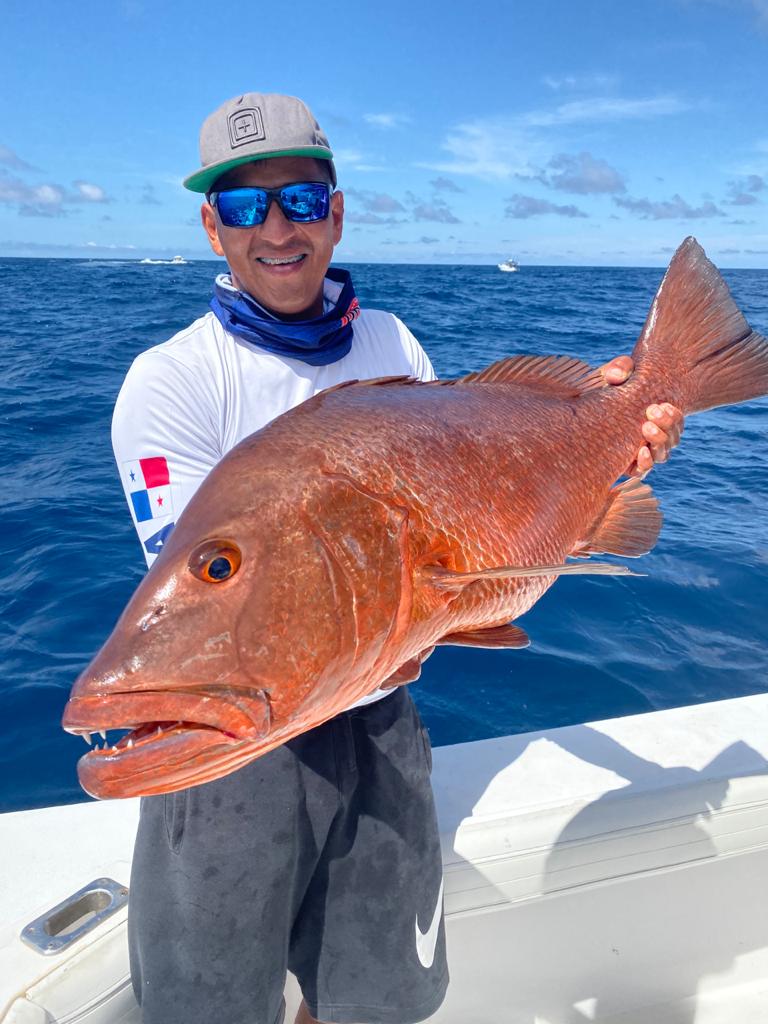
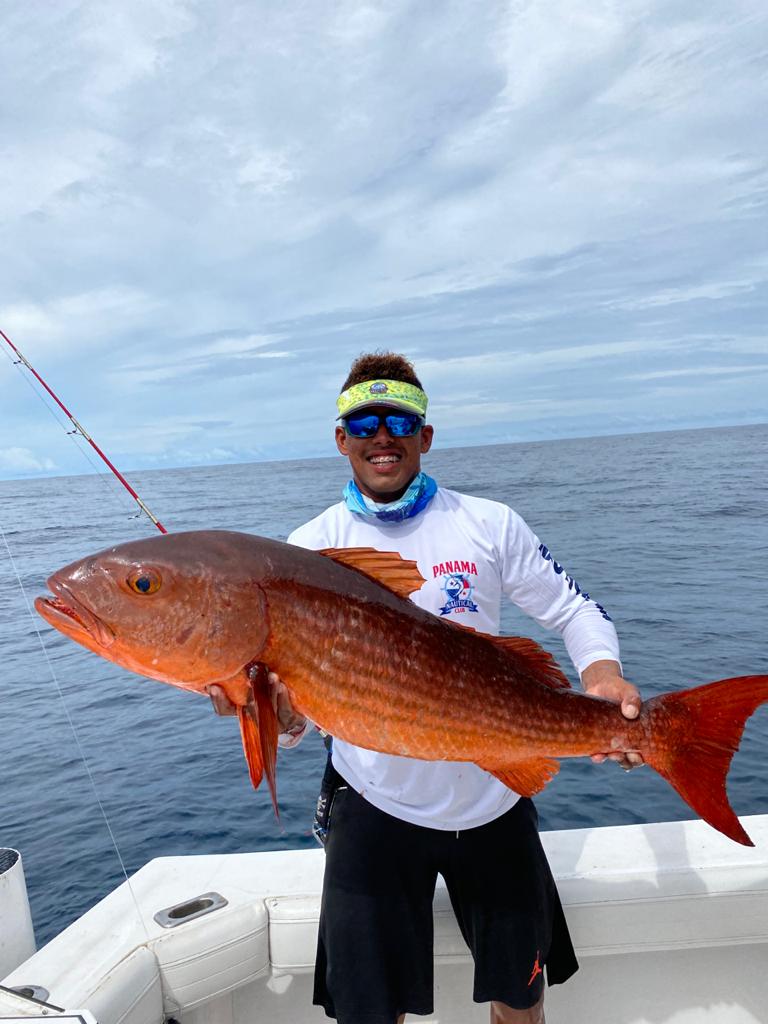
Cubera Snapper are powerful, voracious predators recognized by their thick lips, strong canine teeth, and distinctive triangular tooth patch. They typically strike bait and immediately head for nearby structure, making them one of the toughest reef fish to land. In the Gulf of Chiriquí, Cubera snapper are found around rocky islands, reefs, ledges, pinnacles, and underwater high spots. Areas around Isla Montuosa, Isla Ladrones, Coiba, and the Gulf’s many rocky structures provide prime habitat for these powerful reef predators.

Captain’s tip: Cubera snapper are especially responsive around tide changes, so we try to time our inshore action around these shifts. They will often explode aggressively on large poppers, but the real challenge comes after the strike. The goal is to stop the fish before it reaches the rocks, so keep heavy pressure on immediately and be ready to put serious drag on from the moment it bites. Give a Cubera an inch, and it will usually take you straight into the structure.

Cubera Snapper are a protected species in Panama and are strictly catch-and-release.

Cubera Snapper
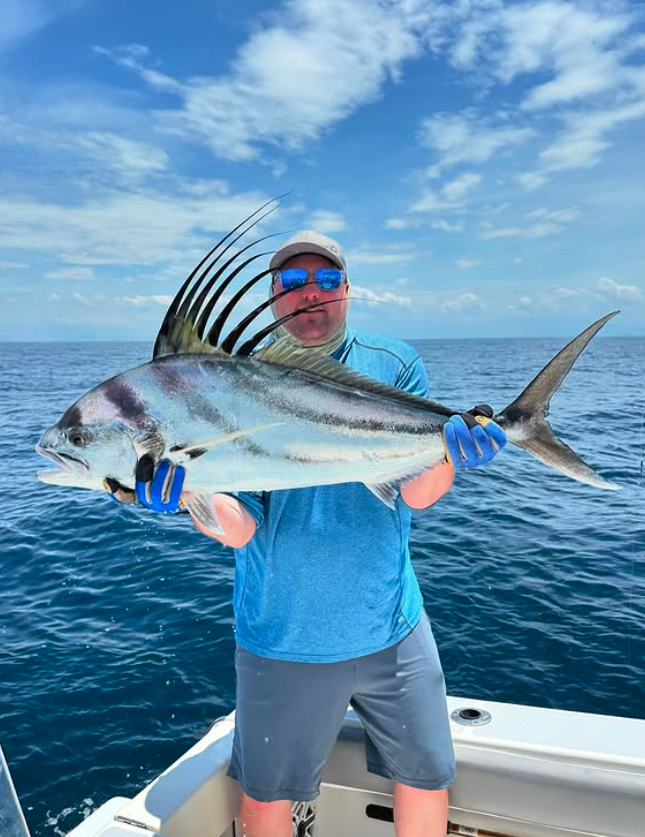
roosterfish in panama

Roosterfish

  • Scientific name: Nematistius pectoralis
  • Type: Inshore game fish
  • Habitat: Rocky shorelines, islands, reefs and structure
  • Techniques: Live bait, trolling, casting
  • Season: Year-round; peak December-February

Roosterfish are unique to the Eastern Pacific and are one of the most iconic inshore game fish, recognized by their distinctive comb-like dorsal fin. Found from Baja Mexico to northern South America, they inhabit beaches and rocky shores and are often caught on live bait or poppers. Roosterfish fight with the power and stubbornness of jacks, but can also leap, making them highly sought-after sport fish. They can exceed 100 pounds, with the IGFA record since 1960 standing at 114 pounds, caught near La Paz, Mexico.

Captain’s tip: When a rooster eats, hold on and let him run. Keep steady pressure and don’t horse the fish. When he turns, wind down quickly to pick up the slack, then lift the rod and reel as you lower it—steady, controlled pumps will bring him closer. Roosters are strong, stubborn fighters, so stay patient and keep a tight line.

Roosterfish are a protected species in Panama and are strictly catch-and-release.

Mullet Snapper

  • Scientific name: Lutjanus aratus
  • Type: Inshore game fish
  • Habitat: Rocky shorelines, islands, reefs and structure
  • Techniques: Poppers, surface iron, metal jigs and live bait
  • Season: Year-round

Mullet Snapper are powerful midwater snapper found around rocky areas in the Gulf of Chiriquí, generally down to about 150 feet. They can reach impressive sizes, with the current world record at 45 pounds, and are excellent fighters for their size. They can be caught on poppers, jigs and live bait, with larger live baits producing the biggest fish.

Captain’s tip: When we find pargo lisa up shallow, we’ll often throw a popper, but work it slower than you would for a jack. Give it a good pause between chugs. If they’re holding deeper, we’ll switch to metal jigs or live bait—and for the really big ones, we’ll go big with the bait.

Panama Fishing Pictures

Amberjack

  • Scientific name:Seriola spp.
  • Type: Structure fish and offshore
  • Habitat: Deep reefs, pinnacles and offshore structure
  • Techniques: Jigging, live bait and bottom fishing
  • Season: Year-round

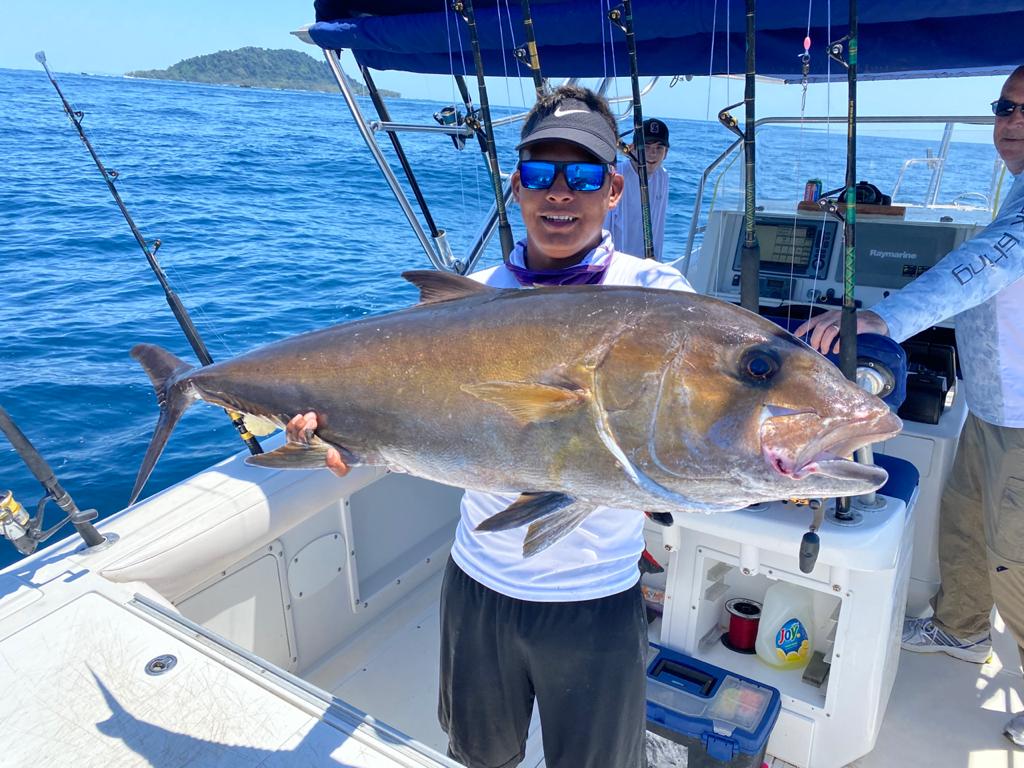
 In many parts of Latin America, they are called Pez Fuerte which literally means Strong Fish. Amberjack are generally associated with deeper structure rather than shallow beaches. They are a good target for anglers interested in heavy tackle and vertical fishing. 

Captain’s tip: If an amberjack is feeding higher in the water, we can work them up with chum and sometimes get them right to the surface. When they come up, things get exciting fast.

Almaco Jack

  • Scientific name: Seriola rivoliana
  • Type: Inshore and offshore game fish
  • Habitat: Rocky reefs, pinnacles, drop-offs and deeper offshore structure
  • Techniques: Live bait, metal jigs, vertical jigging and trolling
  • Season: Year-round

Almaco Jack are powerful pelagic game fish related to amberjack and yellowtail. They are commonly found around reefs, slopes and wrecks, feeding on baitfish and small squid. Their exceptional stamina makes them a popular target for offshore anglers in the Gulf of Chiriquí.

Captain’s tip: We’ll look for Almaco Jack around reefs, steep drop-offs and especially wrecks. They’re strong fish with plenty of stamina, so once we find them, we like to work live bait or a jig through the depth where they’re holding

Where we fish

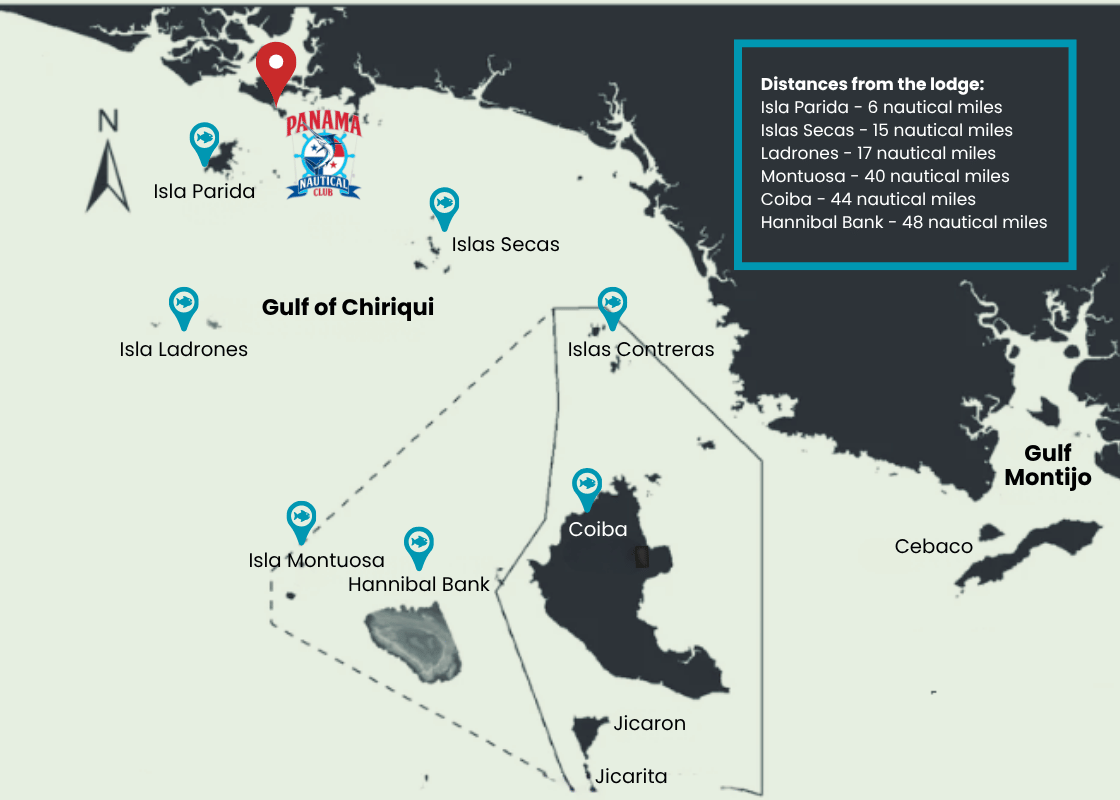
Based on Isla Boca Brava in Panama’s Gulf of Chiriquí, our fishing grounds range from rocky coastlines and reefs to productive offshore waters. For inshore fishing, we have access to nearby islands including Isla Parida only 10 minutes from the lodge, and Islas Secas, as well as the rocky structure and coastline around Boca Brava. Longer offshore excursions reach renowned fishing grounds including Isla Montuosa, Isla Ladrones, Coiba, and Hannibal Bank, where anglers can encounter yellowfin tuna, wahoo, dorado, sailfish and marlin. Our captains choose the fishing grounds based on current conditions, bait activity and where the fish are holding that day.
FAQ's

If your goal is to experience the greatest variety of species on one fishing trip, December through February is an excellent time to visit Panama’s Gulf of Chiriquí. During this period, anglers can target a mix of offshore and inshore species, including marlin, Cubera snapper, roosterfish, yellowfin tuna, dorado, wahoo and Pacific sailfish.

Our location on Isla Boca Brava places us within the Gulf of Chiriquí and provides access to both nearby inshore fishing and major offshore grounds. Rather than relying on one fishing area, our captains choose locations and techniques based on season, tides, bait, currents and real-time fishing conditions.

Yes. Fishing is tailored to different experience levels. Our patient captains work with all skill levels in achieving their fishing goals, whether they are experienced offshore anglers or fishing in Panama for the first time.


Panama Nautical Club is located on Isla Boca Brava, giving boats direct access to the Gulf of Chiriquí. Isla Montuosa is approximately 40 nautical miles away and Hannibal Bank approximately 48 nautical miles from the lodge.


Plan Your Panama Fishing Trip

Come for the fishing. Stay for the Island. Bring the Family.

Panama Nautical Club puts you within reach of some of Panama’s most exciting Pacific sportfishing. Fish renowned waters, then return to the privacy and comfort of your own island retreat. Whether you’re planning a serious multi-day offshore expedition, chasing a bucket-list species, or combining fishing with diving and island adventures, we’ll build your trip around your target species, fishing days, group and goals.

Your boat. Your captain. Your fishing grounds. Your adventure.