
Yellowfin Tuna in Panama
Yellowfin tuna (Thunnus albacares), also known as ahi tuna, are among the most sought-after game fish in Panama. The Gulf of Chiriquí is home to enormous concentrations of baitfish—including bonito, skipjack, blue runners and flying fish—which attract schools of yellowfin and create some of the most spectacular tuna fishing in the Pacific. From surface-feeding tuna frenzies to powerful offshore fish weighing hundreds of pounds, Panama offers year-round yellowfin fishing with a particularly strong window for trophy fish.
Yellowfin Tuna Fishing at a Glance:
- Scientific name: Thunnus albacares
- Season: Year-round with the best months for cow-sized yellowfin tuna: April through July
- Trophy fish: Yellowfin exceeding 300 pounds are possible
- Fishing grounds: Isla Montuosa, Hannibal Bank and surrounding offshore waters
- Main techniques: Live bait, trolling, topwater casting, chumming and jigging
Yellowfin Tuna Season in Panama
Yellowfin tuna can be caught year-round in Panama, so there is no true off-season. But for anglers specifically targeting cow-sized yellowfin, we recommend April through July, with June often being a particularly productive month. Strong tuna activity can continue into August.
How We Fish for Yellowfin Tuna
Our captains locate feeding tuna by reading the water and watching for multiple signs of activity, including commercial-boat activity, fish-finder readings, diving birds, baitfish, and surface action or tuna frenzies.
Once we locate the tuna, we start to rig and slow troll live bait like bonito or blue runners in hopes to gain interest. Dolphin are a real nuisance for the crew when hunting tuna as they attack and kill the baits. Other techniques involve:
- Poppers and stickbaits — effective when tuna are actively feeding on the surface.
- Jigging — highly effective when tuna are holding deeper in the water column.
Because conditions can change quickly, our captains adjust techniques throughout the day based on where the tuna are feeding and how they are responding.
The Ultimate Show: Panama’s Tuna Frenzies
One of the most spectacular sights in the Gulf of Chiriquí is a tuna frenzy. When yellowfin push schools of baitfish toward the surface, thousands of baitfish can compress into tight balls as they try to escape. Tuna attack from below and from all sides, creating explosive surface action. The spectacle usually attracts more than tuna. Dolphins may circle the bait, while seabirds dive from above. Floating logs and other structure can provide temporary shelter for baitfish as predators surround them.
For anglers, these feeding frenzies create opportunities to cast directly into the action and experience some of the most exciting surface fishing in Panama.
Where we Fish for Yellowfin Tuna in Panama
Yellowfin tuna begin moving north toward the Gulf of Chiriquí around February, following concentrations of spawning squid and baitfish.
By April, large schools can be found around Isla Montuosa and Hannibal Bank, two of the Gulf’s most renowned offshore fishing grounds. The tuna action generally builds through the spring and summer, with April through July offering some of the most consistent opportunities for large yellowfin.
How Big Do Yellowfin Tuna Get?
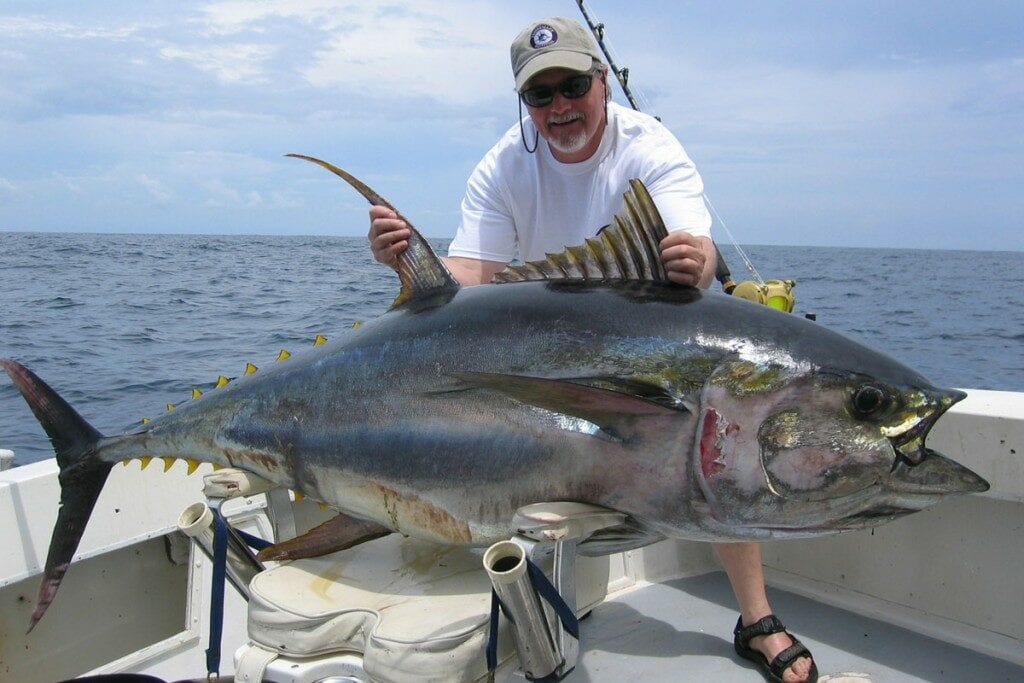
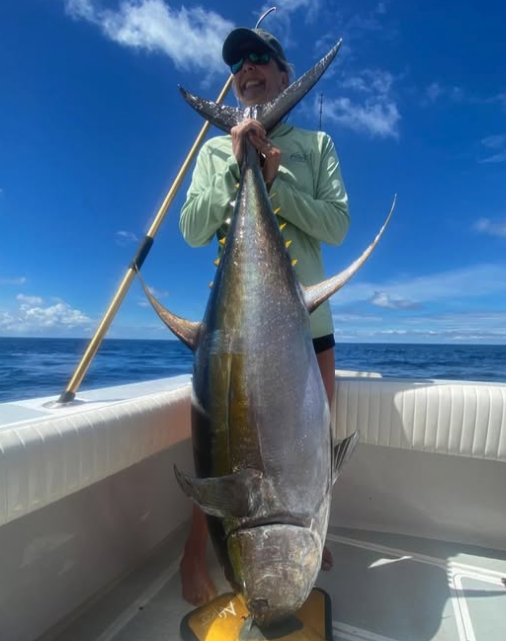
Yellowfin tuna can grow to around 6 feet in length and several hundred pounds, although fish of this size are exceptional. The Gulf of Chiriquí is known for its opportunity to encounter very large yellowfin, including 300-pound-plus “cow” tuna. These fish are exceptionally powerful and can make long, physically demanding runs.
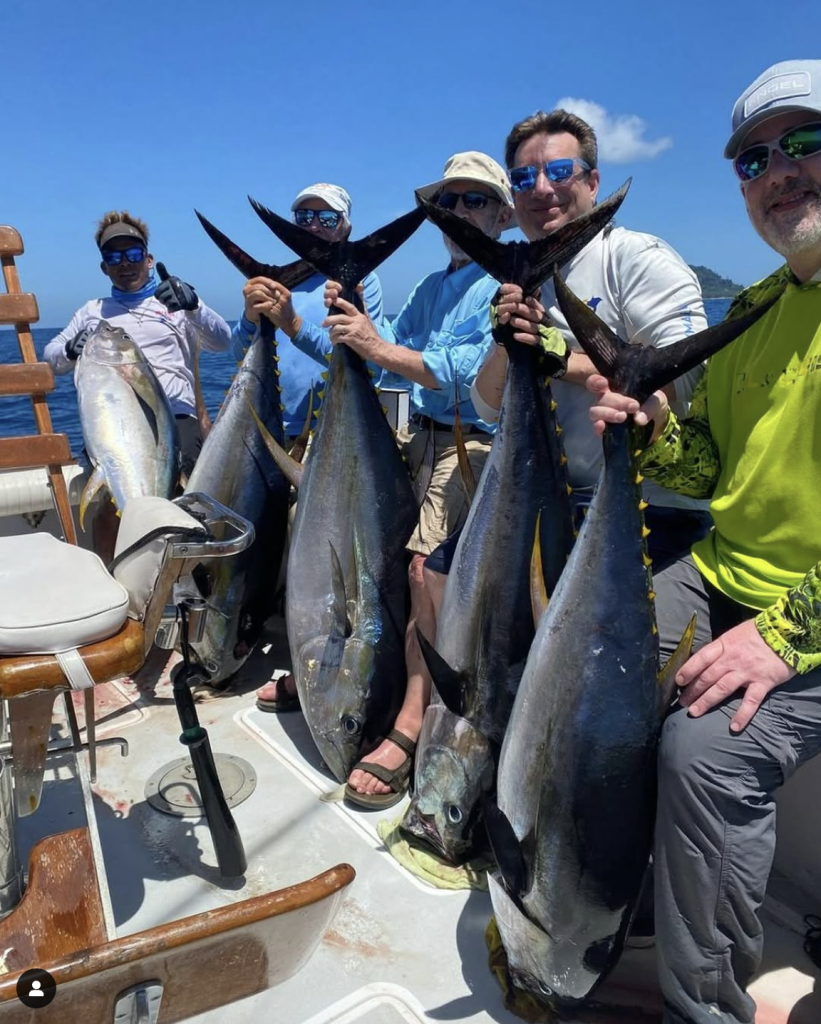
In peak periods, boats can encounter multiple yellowfin in a single day, although the number and size of fish naturally vary with conditions and location.
Fighting a Large Yellowfin Tuna
Large yellowfin are among the most demanding fish an angler can encounter. Their combination of speed, power and endurance makes the fight particularly challenging, especially with a trophy-sized fish.
For anglers specifically targeting very large yellowfin, we recommend fishing from a boat equipped with a fighting chair. The chair provides a stable platform during a prolonged fight and allows the angler and crew to work together more effectively. Panama Nautical Club’s fleet includes 33-foot BlackFin sportfishing boats with fighting chairs, as well as center-console boats, allowing us to match the boat and fishing style to the trip.
Tuna Fishing with Panama Nautical Club
From our private-island base on Isla Boca Brava, anglers have access to the offshore waters of the Gulf of Chiriquí without beginning the day from the mainland.
Consider booking a vessel with a fighting chair if you are serious about landing a large 350 lb cow tuna. Our Captains at Panama Nautical Club are all very experienced and passionate about their fishing. If you are planning a Panama Tuna Fishing Trip and need some advice please don’t hesitate to contact us. If you want to talk Panama Tuna Fishing, we can do that all day.
Yellowfin Tuna Faq's
Absolutely. Our crew is experienced in working with first-time and beginner anglers and will take the time to explain the equipment, techniques, and what to expect when fighting a tuna. We educate and guide you throughout the experience while still giving you the opportunity to fish and fight the tuna yourself. Our goal is to help beginners build confidence while enjoying the full experience of catching a yellowfin tuna.
Yes. Our team can clean and fillet your yellowfin tuna, and we can arrange to vacuum-seal your catch for transport home. Our team can also advise you on the best way to transport and preserve your fish depending on your onward travel plans.
Catch numbers vary considerably with conditions, location and the behavior of the fish. During peak periods, it is possible for boats to encounter 20 or more yellowfin in a day, although this should not be considered a guaranteed catch rate.
Yes, you are welcome to bring your own fishing gear. However, we provide everything you need to fish successfully in the Gulf of Chiriquí, including custom rods and high-performance tackle selected specifically for the species and conditions we fish here. Our gear is designed to give anglers the right setup for targeting powerful yellowfin tuna and other offshore species.